
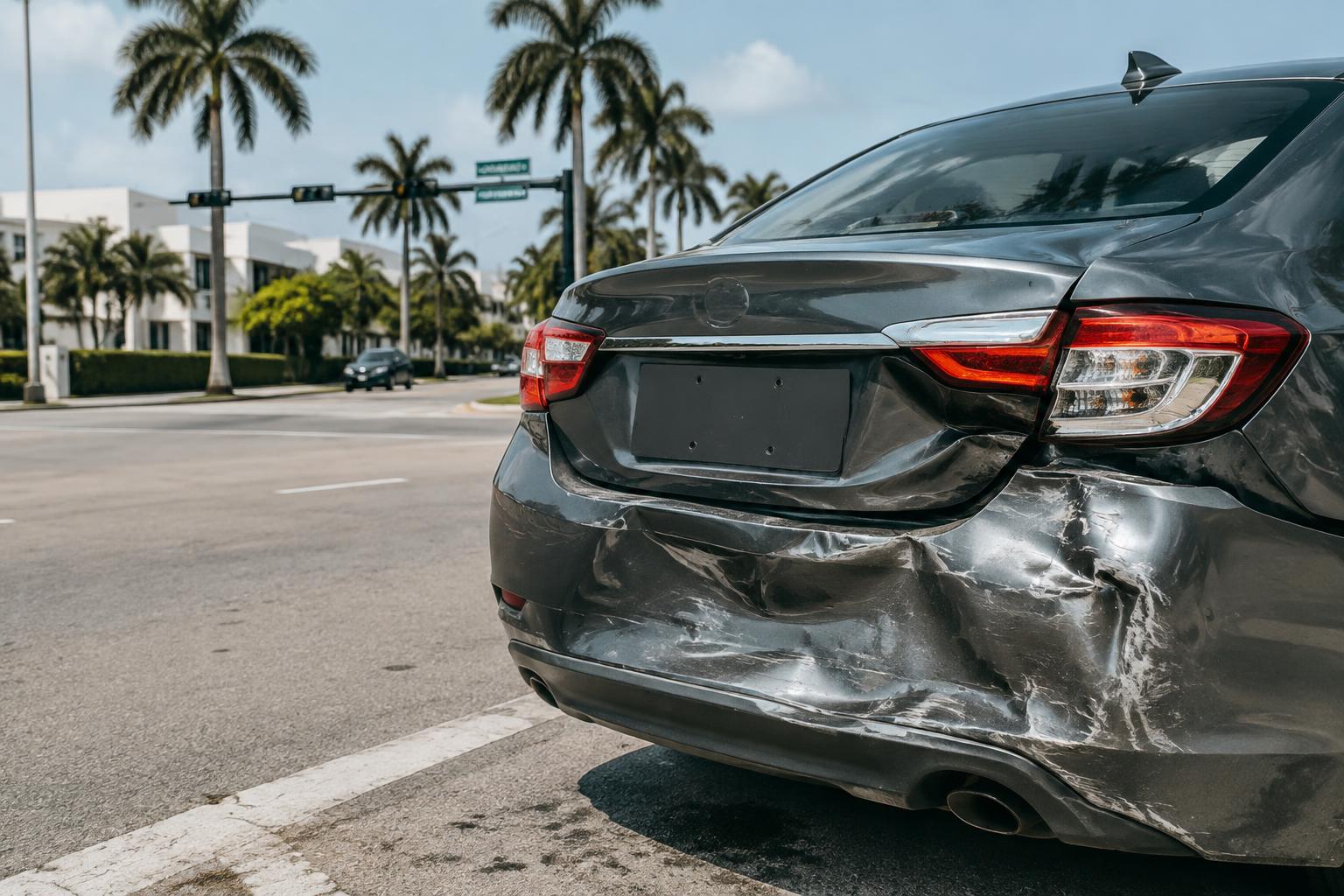
What to Do After a Rear-End Collision in Florida
The moments after a rear-end collision are stressful, but the steps you take can affect your health and any future claim. Move to a safe location if possible, check for injuries, and call law enforcement so an official crash report is created. Exchange insurance and contact information with the other driver and take photos of both vehicles, license plates, and the surrounding scene.
Even if you feel fine, seek medical evaluation soon after the crash. Soft-tissue injuries like whiplash often don't produce symptoms immediately, and a documented gap in treatment can be used against you later. Keep copies of all medical records, repair estimates, and correspondence with insurers, since this paperwork becomes the backbone of a car accident claim.
Who Pays When You're Rear-Ended in Florida?
Florida is a no-fault state, which generally means your own personal injury protection (PIP) coverage pays initial medical bills and lost wages after a crash, regardless of who caused it. PIP typically covers a portion of these costs up to your policy limits, but it may not come close to covering serious injuries from a rear-end impact.
When You May Step Outside No-Fault
If injuries meet a certain severity threshold under Florida law, an injured person may be able to pursue a claim against the at-fault driver beyond PIP. In rear-end collisions, the trailing driver is frequently presumed to bear responsibility, though this presumption can be challenged with evidence about sudden stops, mechanical failure, or other circumstances.
Common Injuries from Rear-End Accidents
Rear-end impacts, even at relatively low speeds, can cause significant harm because of how the body absorbs sudden forward-and-back motion.
- Whiplash and neck strain
- Herniated or bulging discs
- Concussions and other head injuries
- Lower back and spinal injuries
- Shoulder and airbag-related injuries
Some of these conditions, particularly disc and spinal injuries, may worsen over time without treatment. A thorough medical work-up helps establish a clear record connecting your symptoms to the collision, which supports both your PIP claim and any additional claim you may pursue.
It's also worth noting that vehicle damage severity doesn't always predict injury severity. A rear-end collision that leaves only minor cosmetic damage can still transmit enough force to injure the neck and spine, since modern bumpers are designed to absorb impact at the expense of showing visible harm. Insurers sometimes point to minor property damage as a reason to dispute the extent of an injury claim, even though the two aren't always correlated.
Passengers in your own vehicle, as well as any pedestrians or cyclists caught up in the collision, may also have their own claims stemming from the same crash. If your accident involved someone outside a vehicle, our pages on pedestrian accidents and bicycle accidents discuss how those situations are typically evaluated alongside a rear-end claim.
How Florida's No-Fault Rules Affect Rear-End Accident Claims
Because PIP applies regardless of fault, insurers sometimes use the no-fault framework to limit payouts, arguing that treatment wasn't related to the crash or wasn't medically necessary. Rear-end collision victims can face pushback even when liability seems obvious, especially when injuries are soft-tissue in nature and harder to see on imaging.
If your damages exceed available PIP benefits, or if the insurer disputes your treatment, this guide explains some common reasons claims get delayed or undervalued, and why documentation matters so much in these disputes.
Comparative Fault in Multi-Factor Rear-End Crashes
Not every rear-end collision is simple. Sudden stops, brake-checking, distracted driving, or a chain-reaction crash involving several vehicles can shift some responsibility onto more than one driver. Florida applies a comparative fault approach, meaning compensation can be reduced in proportion to a person's own share of fault.
Insurance adjusters may attempt to assign you a larger share of fault than is warranted to reduce what they owe. Careful review of the crash report, witness statements, and vehicle damage patterns can help counter unfair fault allocations in a multi-vehicle accident or a straightforward two-car collision alike.
Rear-End Collisions Involving Commercial or Rideshare Vehicles
When the vehicle that struck you belongs to a company, delivery service, or rideshare driver, additional insurance layers may come into play. Commercial policies and rideshare coverage periods can differ significantly from a standard personal auto policy, and identifying the right coverage source takes careful review of the driver's status at the time of the crash.
These claims often move differently than a routine two-driver case, so it can help to have our personal injury team evaluate which policies may apply, including any rideshare accident coverage that might extend to your situation.
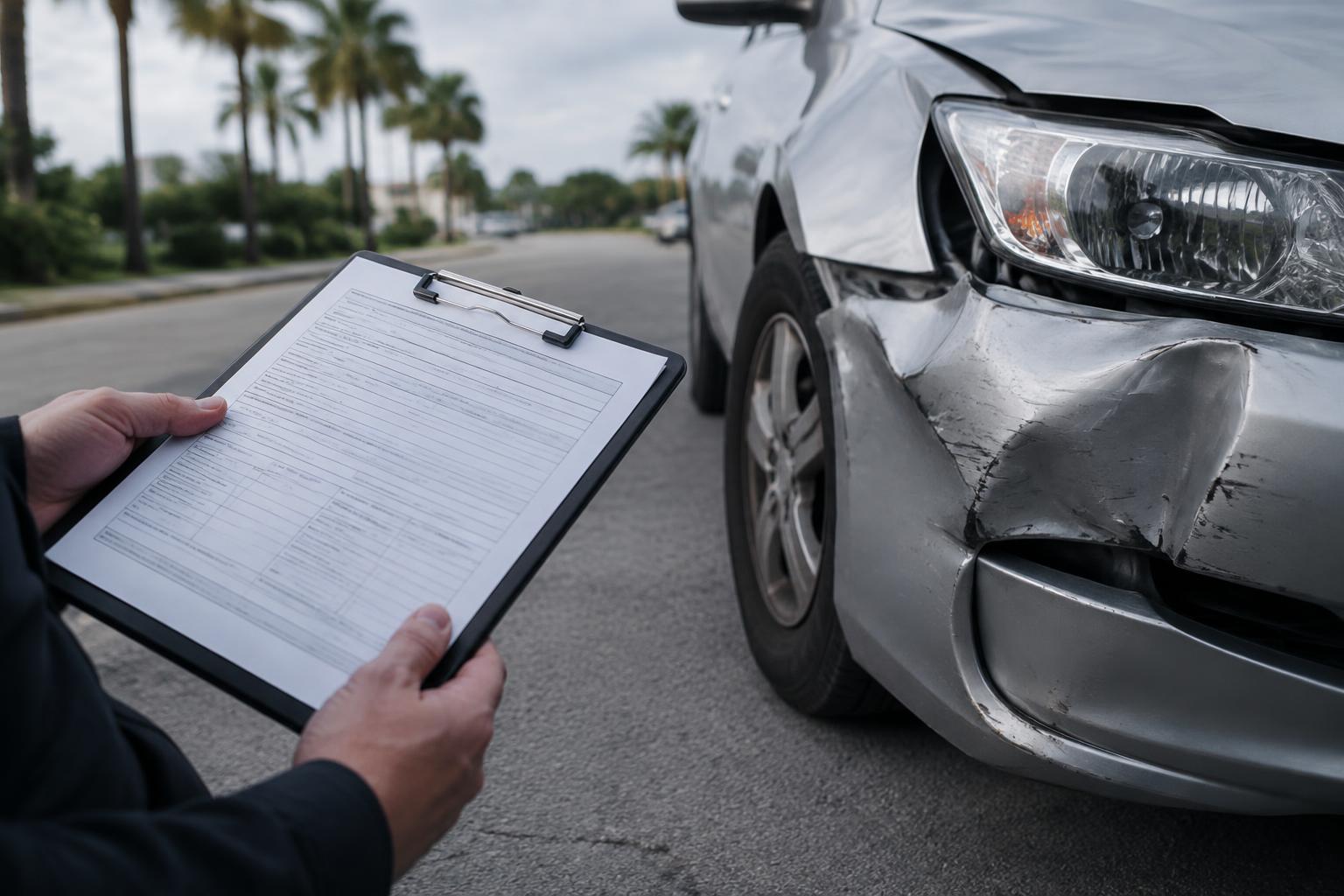
Property Damage After a Rear-End Accident
Beyond injuries, rear-end collisions frequently cause meaningful damage to bumpers, trunks, frames, and safety systems like sensors and cameras built into modern vehicles. Getting an accurate repair estimate, and understanding whether your insurer is offering fair value for parts and labor, is an important part of resolving the aftermath of a crash.
If the at-fault driver's insurer is slow to respond or disputes the repair cost, a vehicle property damage claim may need to be pursued separately from the injury portion of your case.
Uninsured or Underinsured Drivers in Rear-End Cases
Some rear-end accidents involve a driver who doesn't carry enough insurance, or any at all, to cover the harm they cause. If you carry uninsured/underinsured motorist (UM) coverage, this portion of your own policy may become the primary source of recovery once PIP and any liability coverage are exhausted.
Reviewing your policy for UM coverage early can shape your claim strategy, and our uninsured motorist claims page walks through how this type of coverage typically works.
How an Attorney Can Help After a Rear-End Collision
Handling a claim on your own while recovering from an injury can be overwhelming, especially when insurers dispute treatment or fault. An attorney can help gather evidence, communicate with adjusters, and evaluate whether your damages exceed what PIP alone will cover.
George Orellana and the team at Orellana Law work with clients across Florida on car accident matters, and offer a free consultation to discuss the facts of your case. This is not legal advice, and every situation is different, so speaking with an attorney about your specific circumstances is the best way to understand your options.
Our office also handles related matters such as distracted driving accidents and hit-and-run accidents, both of which can overlap with rear-end collision cases when the trailing driver was texting, fled the scene, or otherwise complicated the aftermath of the crash. Reviewing the full circumstances of your accident helps ensure no potential source of compensation is overlooked.
For general background on how the claims process works across different accident types, our car accidents overview and our resources section offer additional context that may be helpful as you sort through the aftermath of a rear-end collision.
How Long Does a Rear-End Collision Claim Take in Florida?
There's no fixed timeline for resolving a rear-end collision claim, since the process depends on the severity of your injuries, how long treatment lasts, and how cooperative the insurance company is. A claim involving only minor soft-tissue injuries and a quick recovery may resolve in a few months, while one involving ongoing physical therapy, injections, or surgery often takes considerably longer because it's important to understand the full extent of your injuries before settling.
Rushing to settle before reaching maximum medical improvement can leave money on the table if symptoms persist or worsen. On the other hand, an insurer may drag out negotiations hoping an injured person will accept a lower offer out of frustration. Keeping detailed records throughout treatment, and understanding why insurance claims get delayed or undervalued, can help you recognize whether a delay is reasonable or a negotiating tactic.
Mistakes to Avoid After a Rear-End Collision
Certain missteps after a rear-end collision can make it harder to recover full compensation later. Delaying medical treatment, missing follow-up appointments, or downplaying symptoms to a doctor can all create gaps in the record that an insurer may later use to argue your injuries aren't serious or aren't related to the crash.
- Giving a recorded statement before understanding how it may be used
- Posting about the accident or your activities on social media
- Accepting a quick settlement before your injuries are fully understood
- Failing to document vehicle damage and the accident scene thoroughly
- Ignoring follow-up care once initial pain subsides
Being aware of these pitfalls can help protect your claim's value. If you're unsure whether an insurer's request is reasonable, our personal injury team can review your rear-end collision before you respond.
Serving all of Florida
Rear-End Collisions Guidance in Miami-Dade County and Across Florida
Orellana Law has one office in Miami and serves clients with rear-end collisions matters throughout Miami-Dade County and across the entire State of Florida. Wherever you are in the state, you can meet with the firm by phone or video. Contact the firm to discuss your situation.