
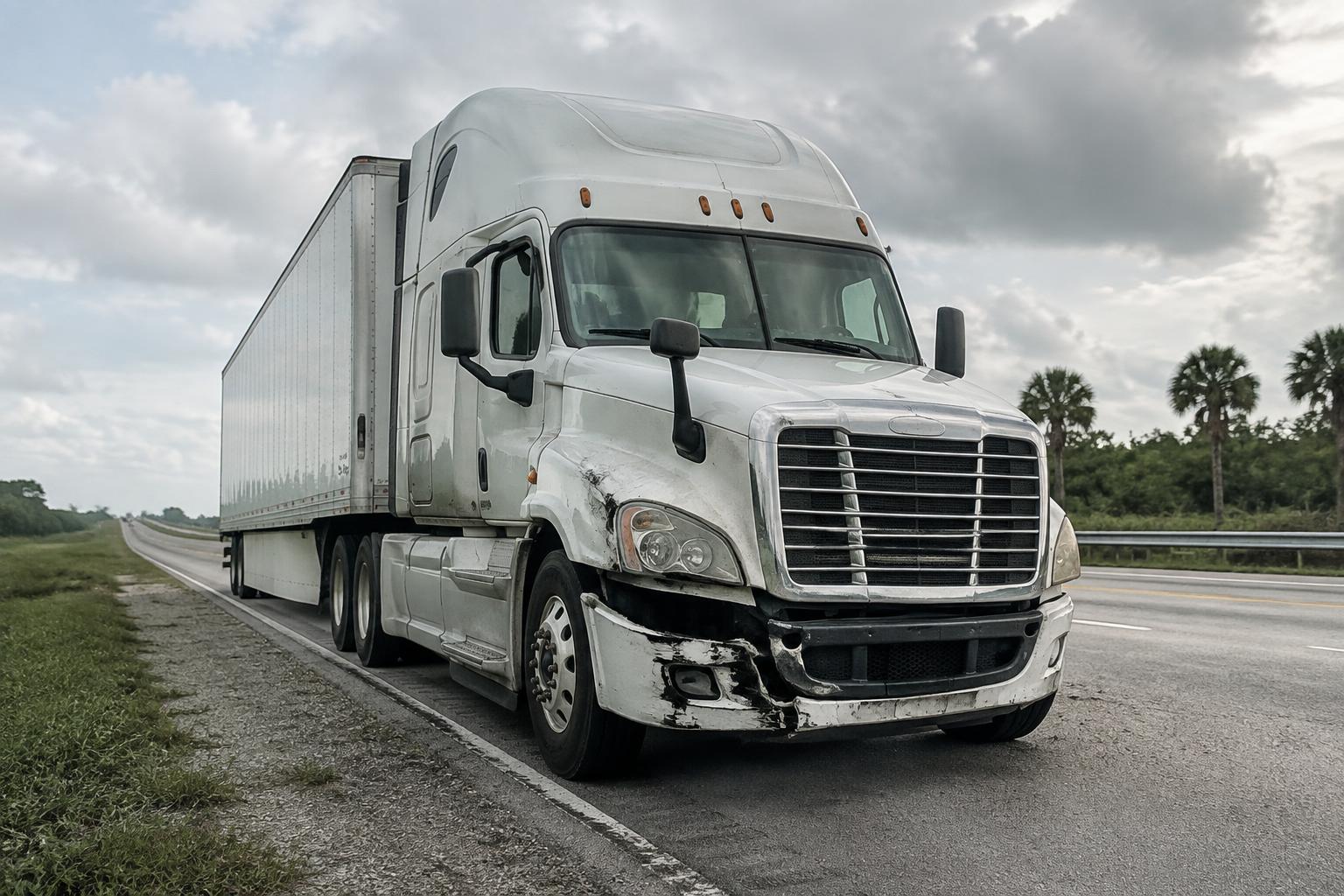
Why Truck Accidents Are More Complex Than Typical Car Crashes
Commercial trucks are governed by federal and state regulations covering driver hours, vehicle maintenance, and cargo loading, in addition to standard traffic laws. When a truck accident occurs, the trucking company, the driver, and sometimes a separate maintenance or cargo company may all bear some responsibility. This is different from a typical multi-vehicle accident between passenger cars, where fewer parties are usually involved.
Because of these additional layers, truck accident claims often require gathering records beyond the police report, such as driver logs, maintenance records, and company safety policies.
Common Causes of Truck Accidents
- Driver fatigue from long hours on the road
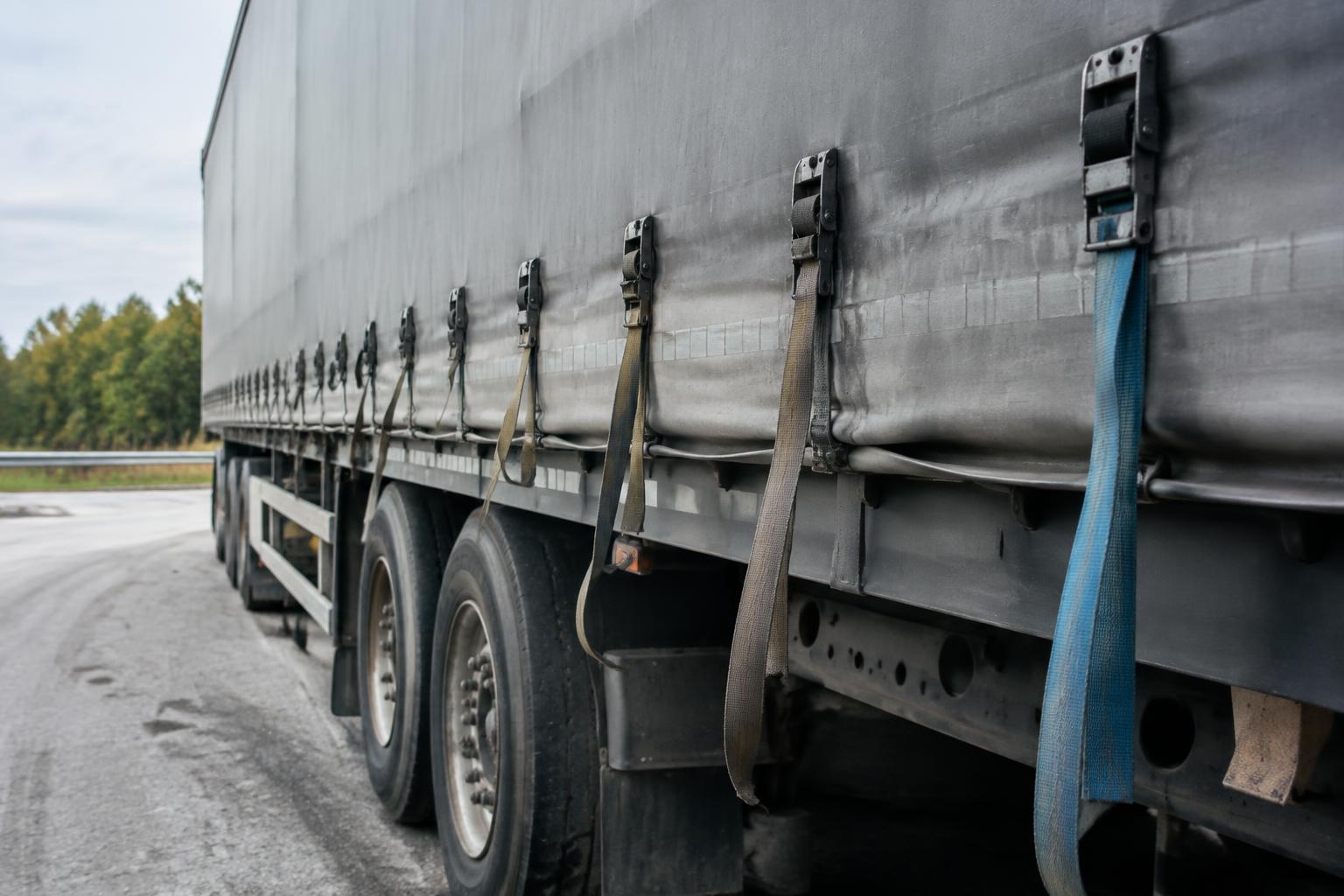
- Improperly loaded or secured cargo
- Poor vehicle maintenance, including brake or tire failure
- Distracted or impaired driving
- Wide turns or blind spots that lead to collisions with smaller vehicles
Identifying the specific cause of a truck accident often shapes which parties may share responsibility and what evidence needs to be preserved quickly.
Who Can Be Held Responsible in a Truck Accident Claim?
Depending on the circumstances, responsibility in a truck accident may extend beyond the driver to the trucking company, a leasing company, a cargo loading company, or a maintenance provider. This is one of the key differences from a standard multi-vehicle accident claim, where liability is often limited to the drivers involved. Identifying every potentially responsible party can affect the total insurance coverage available for a claim.
Commercial trucking policies typically carry higher coverage limits than personal auto policies, which can be significant when injuries are severe.
The Importance of Preserving Evidence Quickly
Trucking companies often have policies for retaining electronic logging device (ELD) data, dashcam footage, and maintenance records only for a limited time before it may be overwritten or discarded. Sending a prompt request to preserve this evidence can be important in truck accident cases. Skid marks, cargo spillage, and vehicle debris at the scene can also degrade or be cleared quickly, so early documentation matters.
Federal Regulations That May Apply to Truck Accidents
Commercial trucks operating across state lines are generally subject to federal motor carrier safety regulations covering areas like maximum driving hours, vehicle inspections, and driver qualifications. Violations of these regulations, if discovered, can be relevant to establishing negligence in a truck accident claim. These regulations exist alongside general Florida traffic laws and negligence principles.
Injuries Commonly Seen in Truck Accidents
Given the size and weight difference between commercial trucks and passenger vehicles, truck accidents often result in more severe injuries, including traumatic brain injuries, spinal cord injuries, and fractures. In some cases, injuries may qualify as catastrophic injuries that require extensive ongoing treatment. Documenting the full extent of injuries early supports a more accurate claim value later.
Insurance Considerations for Truck Accident Victims
Your own PIP coverage typically applies first for initial medical treatment under Florida's no-fault system, similar to other car accidents. Beyond that, claims against a trucking company's commercial liability policy may become relevant depending on fault and injury severity. Multiple insurers may be involved, and each may conduct its own investigation into the crash.
What to Do After a Truck Accident
Key Steps
- Call 911 and request police response
- Get the truck's DOT number and the trucking company's name if visible
- Photograph the scene, including cargo and skid marks
- Collect witness contact information
- Seek medical attention promptly, even for seemingly minor injuries
How Truck Accident Claims Differ From Passenger Car Claims
Because truck accident claims often involve multiple insurance policies and potentially responsible parties, they can take longer to investigate than a typical passenger vehicle crash. Insurers representing large trucking companies may have dedicated claims teams and legal resources, which is different from dealing with an individual driver's personal auto insurer in a standard head-on collision claim.
The Role of Trucking Company Safety Records
Trucking companies are required to maintain certain safety and inspection records, and a pattern of prior violations or safety complaints can sometimes be relevant to a truck accident claim. This might include prior citations for hours-of-service violations, vehicle inspection failures, or driver qualification issues. Requesting these records early in the process, before they may be routinely purged, can be an important step in building a complete picture of what led to the crash.
Some trucking companies self-insure or carry layered insurance policies, meaning more than one insurer may need to be involved in resolving a single claim, which can add time to the process.
Multi-Vehicle Pileups Involving Commercial Trucks
Because of their size and stopping distance requirements, trucks are sometimes involved in chain-reaction crashes on highways, particularly during sudden traffic slowdowns or poor visibility conditions. These incidents can resemble a broader multi-vehicle accident, but with the added complexity of determining what role the truck played in initiating or worsening the pileup. Reconstructing the sequence of impacts in these cases often requires careful review of vehicle damage patterns, witness accounts, and any available video footage from nearby cameras.
How Long Does a Truck Accident Claim Take to Resolve?
Truck accident claims often take longer than typical car accident claims because of the number of parties and insurance policies that may be involved. Investigating driver logs, maintenance records, and company safety history takes time, and multiple insurers may each conduct separate reviews before agreeing to any resolution. Cases involving catastrophic injuries can take even longer, since claims are generally not finalized until the full scope of future medical needs is reasonably understood.
Working with a trucking company's legal and claims teams, who are often well-resourced, can also add complexity compared to negotiating with an individual driver's personal auto insurer.
How Comparative Fault Applies to Truck Accident Claims
Florida's comparative fault principles apply to truck accidents just as they do to other vehicle crashes, meaning a victim's own compensation can be reduced if they are found partially responsible. Trucking companies and their insurers may look for ways to argue that a passenger vehicle driver contributed to the crash, such as by merging too closely in front of a truck. Countering these arguments generally requires detailed evidence, including the truck's stopping distance capabilities and any regulatory violations by the driver or company.
What Evidence Should Be Preserved After a Truck Accident?
Because trucking companies may not retain certain records indefinitely, sending an early written request to preserve evidence, sometimes called a spoliation letter, can help ensure that ELD data, dashcam footage, dispatch records, and maintenance logs aren't discarded before they can be reviewed. Photographs of skid marks, cargo spillage, and the final resting positions of all vehicles involved can also help reconstruct how the crash unfolded.
The sooner this evidence is identified and preserved, the less likely it is to be lost to routine data retention schedules that many trucking companies follow.
Serving all of Florida
Truck Accidents Guidance in Miami-Dade County and Across Florida
Orellana Law has one office in Miami and serves clients with truck accidents matters throughout Miami-Dade County and across the entire State of Florida. Wherever you are in the state, you can meet with the firm by phone or video. Contact the firm to discuss your situation.